
Introduction: Animal Cruelty India, More Common, More Visible, More Reportable
Animal cruelty India cases surface every week: videos of dogs being beaten, cats being thrown, cattle being left to die, and birds being kept in illegal conditions. These incidents are not isolated. They reflect a deeply embedded culture of indifference toward animal pain that India is only now beginning to challenge.
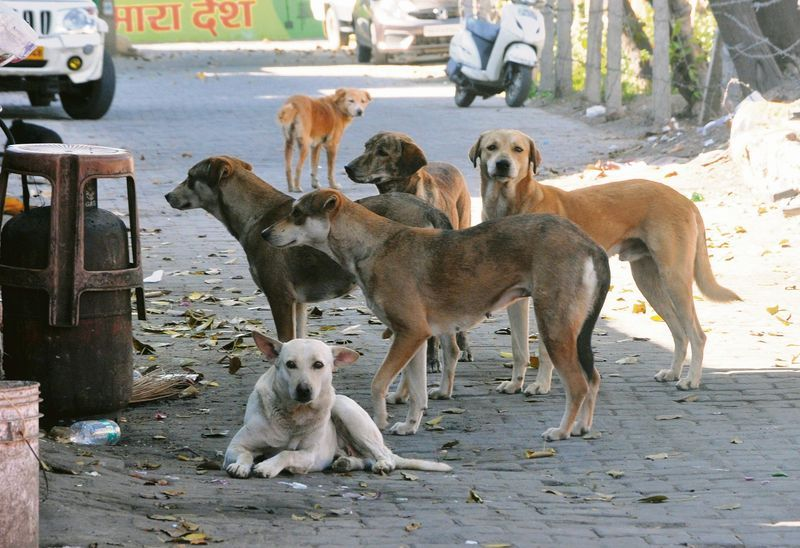
The good news: India has strong animal rights laws, active NGOs, and an increasingly compassionate citizenry. What is missing is awareness: awareness of what constitutes cruelty, how to document it safely, and exactly how to report it so that action is actually taken.
This guide from Earthlings Trust fills that gap. Read it. Share it. Use it.
Table of Contents
How to report animal cruelty in India, in brief:
- Record what you see, with photos, video, date, time and place, without putting yourself at risk.
- Call 112 or go to the nearest police station. Killing, poisoning or maiming an animal is an offence under Section 325 of the BNS and Section 11 of the PCA Act.
- Ask for an FIR, or at least a written acknowledgement of your complaint.
- Report it to the Animal Welfare Board of India and a local animal NGO. In Noida, call Earthlings Trust on +91 8800469269 if the animal needs rescue or treatment.
What Counts as Animal Cruelty Under Indian Law?
Short answer: beating, kicking, torturing, overloading, starving, keeping an animal chained or caged for long periods, and abandoning it are all cruelty under Section 11 of the PCA Act, 1960. Killing, poisoning or maiming an animal is also a crime under Section 325 of the BNS, with up to five years in prison.
Under Section 11 of the Prevention of Cruelty to Animals Act, 1960 (PCA Act), the following acts constitute animal cruelty and are criminal offences in India:
- Beating, kicking, overriding, overloading, torturing, or causing unnecessary pain or suffering to any animal
- Employing in any work any animal which is unfit due to age, sickness, or infirmity
- Administering injurious substances to animals
- Confining animals without adequate food, water, shelter, and exercise
- Keeping animals in conditions that cause unnecessary suffering
- Shooting competitions where animals are used as targets
- Abandoning animals in situations likely to cause them suffering or death
- Organising or participating in animal fights (dog fighting, cockfighting)
- Skinning, disembowelling, or performing experiments on animals without proper authorisation
Poisoning stray dogs, one of the most common forms of animal cruelty India sees, is a criminal offence under both the PCA Act and Section 325 of the Bharatiya Nyaya Sanhita (BNS), which replaced IPC Sections 428 and 429 in July 2024.
How to Safely Document Animal Cruelty
Short answer: record photos or video from a safe distance, note the date, time and exact location, and write down vehicle numbers and names of witnesses. Do not confront the person or put yourself at risk; the record is what the police and the Animal Welfare Board need.
Before reporting, documentation strengthens your case. But safety first, do not put yourself at risk:
- Photograph or video the cruelty from a safe distance, without confronting the perpetrator directly
- Note the exact location, date, and time of the incident
- Note the description of the perpetrator(s) if visible
- Note the number and description of animals involved
- Note any witnesses present
- If a vehicle is involved, note the registration number
Do NOT delete footage even if it is disturbing; it is evidence. Back it up to cloud storage immediately.
How to Report Animal Cruelty India: Step by Step
Step 1: Call Your Local Animal NGO
For immediate intervention (an animal in acute danger), call an active animal NGO in your area first. Earthlings Trust can be reached at +91 8800469269 for incidents in Noida, Greater Noida, and Delhi NCR. We can respond faster than authorities in many cases.
Step 2: File an FIR at the Nearest Police Station
Animal cruelty under Section 11 of the PCA Act is a cognisable offence: police are legally required to register an FIR. Go to the nearest police station, present your documentation, and request an FIR under Section 11 PCA Act and Section 325 BNS as applicable.
Step 3: File a Complaint with the Animal Welfare Board of India (AWBI)
The Animal Welfare Board of India is the statutory body for animal welfare. File an online complaint at awbi.gov.in with your documentation. AWBI can direct state authorities to take action.
Step 4: Report to the State/District Animal Husbandry Department
Each district has an Animal Husbandry Department that has jurisdiction over certain animal welfare matters. Contact them with your complaint.
Step 5: Approach the Magistrate Court
If the police refuse to register an FIR (which unfortunately does happen), you can directly approach a Judicial Magistrate under Section 156(3) of the CrPC to compel the police to register and investigate the complaint.
Step 6: Share on Social Media (Carefully)
Documented animal cruelty cases shared on social media create public pressure that often accelerates official action. Share responsibly: pixelate the faces of minors, avoid sharing content that glorifies violence, and always accompany media with a clear call to report.
National and State Animal Cruelty Helplines in India
Keep these numbers saved. When you need to report animal cruelty India cases fast, having a helpline ready can save an animal’s life.
- Animal Welfare Board of India (AWBI): awbi.gov.in | Helpline: 1962
- People for Animals (PFA) National Helpline: 9871022334
- PETA India: petaindia.com | Cruelty complaints: 098201 22602
- Earthlings Trust (Noida/Delhi NCR): +91 8800469269 | earthlingstrust@gmail.com
- Local police emergency: 100
- PCR Van (Delhi): 100 or 1090
What NOT to Do When You Witness Animal Cruelty
- Do not physically confront the perpetrator alone; this can be dangerous
- Do not post vigilante content that could be used against you legally
- Do not share graphic content of animal suffering without a constructive call to action
- Do not give up if the first complaint is ignored; escalate to AWBI or Magistrate
- Do not assume ‘someone else will report it’; in bystander situations, often no one does
Preventing Animal Cruelty India: A Community Responsibility
Animal cruelty does not happen only at the hands of strangers. It happens in:
- Pet shops and puppy mills where animals are kept in squalid conditions
- Homes where dogs are chained permanently or severely neglected
- Streets where children are allowed to throw stones at dogs without adult intervention
- Construction sites where stray animals are deliberately harmed
- Residential areas where poison is laid for stray dogs
Prevention requires community vigilance. Talk to children about compassion for animals. Challenge casual cruelty when you see it. Report pet shops with sick animals to the AWBI. Support your local animal NGO.
FAQ: Animal Cruelty India
Q: What is the punishment for animal cruelty in India?
A: Under Section 11 of the PCA Act, punishment for animal cruelty ranges from a fine of ₹10-₹50 (for first offences, these amounts are outdated and legislative revision is ongoing) to imprisonment of up to 3 months for serious offences. Under Section 325 BNS, punishment can extend to five years imprisonment. Activists are campaigning for significantly stronger penalties.
Q: Can I file a complaint about a neighbour who keeps their dog in bad conditions?
A: Yes. Keeping animals without adequate food, water, shelter, or veterinary care is an offence under Section 11 of the PCA Act. Document the conditions and file a complaint with your local police or the AWBI.
Q: What should I do if I find a poisoned dog?
A: Get the dog to an emergency veterinary clinic immediately; time is critical. Note the location where the dog was found. Report the poisoning incident to Earthlings Trust and local police. Poisoning is a criminal offence under both the PCA Act and the BNS.
Conclusion: Speak Up. Every Animal Deserves Protection.
Animals cannot speak for themselves in the language of law, courts, or social media. Ending animal cruelty India cases depends on ordinary people: on every person who witnesses suffering and chooses to act rather than look away.
Earthlings Trust has been speaking up for animals in Noida and Delhi NCR for years. We rescue, we report, we rehabilitate, and we advocate. Join us in building an India where every animal is protected, respected, and given the dignity they deserve.