Table of Contents
Introduction: One of the Most Common Sources of Conflict in Urban India
Community dog feeding etiquette India is one of the most common flashpoints in urban housing societies. Few issues divide a society faster than the question of feeding community dogs. One resident sees a hungry animal in need of compassion. Another sees a mess outside their gate, a safety concern for their children, or simply an activity they never agreed to. These disputes play out in RWA meetings, WhatsApp groups, and sometimes courtrooms across Delhi NCR every single week.
The good news is that this conflict is almost entirely solvable, not through banning feeding, which is both legally unsustainable and counterproductive, but through structure, communication, and shared responsibility. This guide from Earthlings Trust lays out exactly how.
The Legal Position: Can RWAs Ban Dog Feeding?
No. Indian courts, including the Supreme Court and multiple High Courts, have repeatedly affirmed that community dogs have a right to food and citizens have a right to feed them. RWAs and housing societies cannot pass resolutions that completely prohibit feeding of community animals within their premises. What RWAs can do is regulate the manner, time, and location of feeding, not eliminate it.
This distinction matters enormously. A blanket “no feeding” rule is not just unkind: it is generally unenforceable and has repeatedly been struck down when legally challenged. A reasonable, written feeding policy that designates specific spots and times, however, is both legal and effective at reducing conflict.
For official rules and statutes, refer to the Animal Welfare Board of India and the India Code legislative repository, which host the ABC Rules and related animal welfare statutes.
Why Structure, Not Prohibition, Is the Real Solution
Most complaints about community dog feeding are not actually complaints about feeding itself. They are complaints about:
- Food waste left on walkways attracting flies, rats, or other stray animals
- Feeding directly outside someone’s front door or parking spot
- Feeding at inconsistent times that leaves dogs waiting and barking through the day
- Large groups of dogs congregating in areas used by children or elderly residents
- Feeders who are unresponsive to reasonable concerns raised by neighbours
Every one of these issues is solvable through better practice, not through denying dogs food, which simply pushes the problem (and often makes dogs more anxious, food-insecure, and unpredictable) rather than resolving it. Getting community dog feeding etiquette India right starts with addressing these practical details.
Community Dog Feeding Etiquette India: A Practical Checklist
For Individual Feeders
- Choose a fixed spot: ideally away from main walkways, children’s play areas, parked two-wheelers, and building entrances
- Feed at a consistent time: once dogs learn a predictable schedule, they wait calmly rather than following residents or barking throughout the day
- Use a bowl, not scattered food on the ground: easier to clean up and reduces mess significantly
- Clean up immediately after feeding: leftover food attracts pests and is the single biggest driver of complaints
- Provide water alongside food, especially during summer
- Avoid feeding directly outside individual flats or parking areas: use a shared, agreed-upon community spot instead
- Introduce yourself to your RWA as a responsible feeder and be open to reasonable adjustments if concerns are raised
For RWAs and Housing Societies
- Designate an official feeding spot in consultation with feeders: ideally a corner of the compound away from high foot-traffic areas
- Set feeding windows (e.g., 7-8 AM and 7-8 PM) rather than allowing feeding at any hour
- Put the policy in writing and circulate it, rather than relying on verbal understandings that create confusion
- Support sterilisation and vaccination of the resident community dogs: fewer unsterilised dogs means smaller, more stable, and less conflict-prone dog populations over time
- Avoid resolutions that violate the PCA Act or established case law, which can expose the RWA to legal liability
A written, jointly agreed feeding policy (not a feeding ban) is both the legally sound and the practically effective solution to almost every community dog feeding dispute.
Handling Specific Common Conflicts
Even with clear community dog feeding etiquette India guidelines in place, specific situations still come up. Here is how to handle the most common ones.
“The dogs bark at night.”
Barking is often triggered by unfamiliar visitors, delivery personnel, or genuine security concerns, which is actually a benefit of having alert community dogs. Persistent excessive barking unrelated to any trigger may indicate anxiety or discomfort and is worth investigating rather than simply complaining about. Consistent community dog feeding etiquette India habits, including fixed timing, usually reduce this kind of barking over a few weeks.
“I’m scared of the dogs near the gate.”
Community dogs that are regularly, calmly fed tend to be significantly less reactive than hungry, stressed dogs. If a specific dog shows genuine aggression, this should be reported to Earthlings Trust or a local NGO for behavioural assessment, rather than becoming grounds to stop feeding the entire local dog population, which usually increases food-seeking and unpredictable behaviour.
“Other residents’ children play where the dogs eat.”
This is a legitimate concern and the clearest case for a designated feeding spot away from play areas: a solution that protects both the dogs and the children, rather than pitting their interests against each other. This is exactly the kind of situation good community dog feeding etiquette India practice is designed to prevent.
Building a Feeder-RWA Partnership That Works
The most successful housing societies in Noida and Delhi NCR are the ones where feeders and RWAs work together, applying community dog feeding etiquette India consistently, rather than against each other. This can include:
- RWA-supported feeding stations, built and maintained collectively
- RWA-facilitated ABC (sterilisation) camps for resident community dogs, reducing population growth and associated concerns over time
- A simple complaints and resolution process for feeding-related issues, separate from broader animal cruelty concerns
- Periodic awareness sessions. Earthlings Trust regularly conducts community sessions in Noida societies to bridge misunderstanding between feeders and non-feeders
- A shared WhatsApp or notice-board update whenever the feeding schedule changes, so the whole society stays informed
- An annual review of the community dog feeding etiquette India policy at the RWA’s general body meeting, so it evolves with the society’s needs
FAQ: Community Dog Feeding Etiquette India
Q: Can my RWA legally fine me for feeding stray dogs?
A: No. RWAs cannot legally impose fines specifically for the act of feeding community animals, as this right has been repeatedly upheld by courts. RWAs can, however, reasonably regulate the time and place of feeding through a written policy.
Q: What should I do if my neighbours are hostile about my feeding a community dog?
A: Propose a structured solution (a designated feeding spot and consistent timing) to your RWA in writing. Most conflicts de-escalate significantly once feeding becomes predictable and contained rather than appearing random or unmanaged.
Q: Are community dogs in my housing society legally allowed to stay there?
A: Yes. Sterilised and vaccinated community dogs have a recognised right to remain in the area they have always lived in, and RWAs cannot forcibly relocate or remove them under the ABC Rules and related case law. This is a core part of community dog feeding etiquette India that every RWA should communicate clearly to new residents.
Q: How can I get the community dogs in my society sterilised?
A: Contact Earthlings Trust at earthlingstrust@gmail.com or +91 8800469269. We coordinate ABC (sterilisation and vaccination) camps across Noida and Delhi NCR housing societies.
Q: Is there one rule that covers most community dog feeding etiquette India situations?
A: Yes. Feed at a fixed time and place, away from walkways, gates, and children’s play areas, and clean up promptly afterwards. This single habit resolves most community dog feeding etiquette India disputes before they start.
Q: Do different Indian states have different rules for community dog feeding etiquette India?
A: The core legal position comes from the central Animal Birth Control Rules and Supreme Court and High Court rulings, which apply nationwide, so the fundamental right to feed is consistent across states. Individual RWAs and municipal bodies in cities such as Noida, Gurugram, and Delhi may issue local guidance on timing or designated spots, but none can override the underlying right established at the national level.
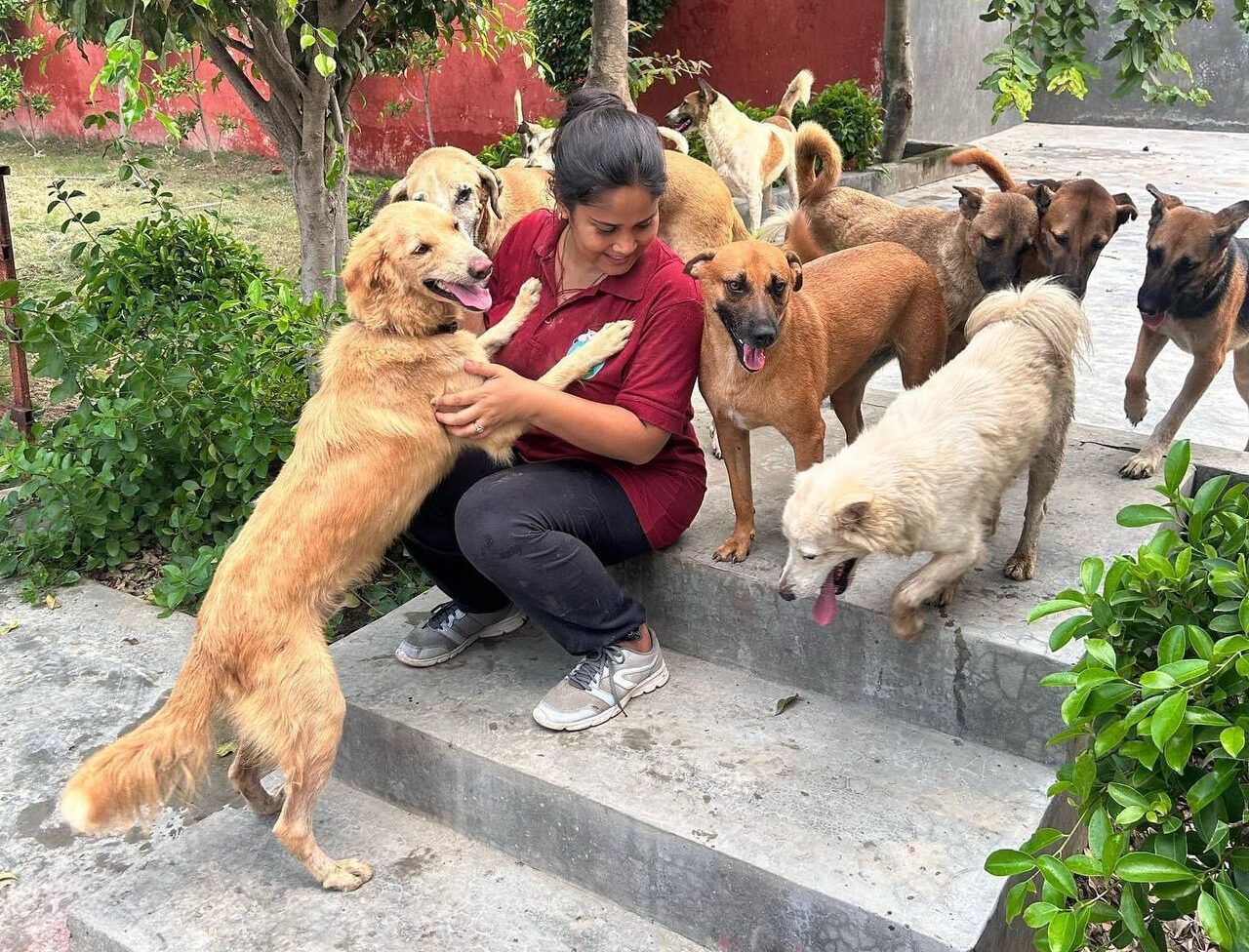
A Sample Written Feeding Policy Your RWA Can Adapt
Many housing societies struggling with community dog feeding etiquette India disputes simply do not have anything in writing. A short, jointly signed policy removes ambiguity and gives both feeders and the RWA something concrete to point to when a new complaint comes up. Below is a simple template that most Noida and Delhi NCR societies can adapt in under an hour.
- Feeding location: Name the exact designated spot (for example, “the corner behind Tower C parking, away from the children’s play area and main walkway”).
- Feeding times: Fix two windows, such as 7 to 8 AM and 7 to 8 PM, so dogs are not fed at unpredictable hours.
- Registered feeders: List the names of residents who regularly feed, so the RWA has a point of contact rather than an anonymous complaint.
- Clean-up responsibility: State clearly that feeders must clear bowls and leftover food within a set time after each feeding window.
- Sterilisation support: Commit the RWA to facilitating ABC camps with an NGO such as Earthlings Trust, since a stable, sterilised population reduces long-term conflict.
- Review clause: Agree to revisit the policy after three to six months, adjusting the spot or timing if genuine problems persist.
Once this kind of policy is signed by the RWA managing committee and shared in the residents’ WhatsApp group or notice board, most day-to-day arguments about community dog feeding etiquette India simply stop, because there is a shared reference point instead of a running dispute.
Conclusion: Compassion and Consideration Are Not Opposites
Feeding community dogs and respecting your neighbours’ comfort are not mutually exclusive goals. With a designated spot, a consistent schedule, and basic clean-up etiquette, feeders and non-feeding residents can coexist peacefully, and the dogs themselves benefit from calmer, more predictable care. Good community dog feeding etiquette India protects everyone, including the animals.
If your housing society is facing feeding-related conflict, Earthlings Trust can help mediate a workable policy and support sterilisation efforts to reduce long-term concerns. Contact us today. Getting community dog feeding etiquette India right benefits everyone in the community.