
Table of Contents
Introduction: The Number One Question in Indian Animal Welfare
“Why are there so many stray dogs, and why doesn’t the government just remove them?” It is one of the most common questions Earthlings Trust hears from residents, RWAs, journalists, and policymakers alike. The honest answer is that removal has been tried in India for decades and has never worked. What does work, and what is now the law of the land, is sterilisation.
Dog sterilisation India is not a side project of animal welfare; it is the single most important, evidence-based intervention available for managing India’s street dog population humanely and sustainably. This guide explains exactly how it works, why it succeeds where culling fails, and how you can be part of the solution.
What Is the Animal Birth Control (ABC) Programme?
Dog sterilisation India begins with the Animal Birth Control programme, India’s official, government-mandated method for managing stray dog populations, regulated by the Animal Welfare Board of India. Under the ABC Rules, 2023 (which replaced the 2001 rules), every municipal body in India is legally required to sterilise and vaccinate community dogs rather than relocate or kill them. The programme works through a simple, repeatable cycle:
- Catch: Community dogs are humanely trapped using nets or catching poles by trained handlers
- Transport: Dogs are moved to a registered ABC centre in a properly ventilated vehicle
- Sterilise: A qualified veterinarian performs the surgery under anaesthesia
- Vaccinate: Dogs receive an anti-rabies vaccine during the same visit
- Recover: Dogs are observed for 3 to 5 days post-surgery in a clean, monitored kennel
- Release: Dogs are returned to the exact location they were picked up from
Under the ABC Rules, 2023, releasing a sterilised dog anywhere other than its original territory is illegal. Relocation disrupts established territories and can trigger fights with unfamiliar dog populations.
Why Sterilisation Works Where Culling Fails: The Vacuum Effect
This is the single most misunderstood concept in stray dog management. When dogs are removed from an area, whether through culling, poisoning, or permanent relocation, the local food and shelter resources that supported them do not disappear. Within weeks, unsterilised dogs from neighbouring areas move in to fill the vacant territory, and because they are not sterilised, the population rebounds even larger than before within a single breeding cycle.
Global data from cities that abandoned culling in favour of sterilisation, including studies referenced by the World Health Organization rabies fact sheet, consistently show that sustained sterilisation coverage of 70% or more in a dog population leads to gradual, permanent decline in numbers. Sterilisation breaks the reproductive cycle instead of creating a resource vacuum that invites migration and rebreeding.
The Health and Behavioural Benefits of Sterilisation
Sterilisation is not only a population-management tool; it is genuinely good for the individual dog.
- Female dogs are protected from pyometra (a life-threatening uterine infection), mammary tumours, and the physical toll of repeated pregnancies on a street diet
- Male dogs have a significantly reduced risk of testicular cancer and prostate problems
- Reduced roaming: sterilised male dogs travel shorter distances searching for mates, meaning fewer road accidents
- Lower aggression during mating season: much of the fighting, chasing, and territorial aggression seen in unsterilised male dog groups drops significantly after sterilisation
- Longer, healthier lives: sterilised community dogs consistently show better body condition and longevity than unsterilised dogs living the same street life
Debunking Common Myths About Dog Sterilisation
Myth: Sterilisation makes a dog fat and lazy. Weight gain after sterilisation is caused by unchanged calorie intake with a slightly lower metabolism, not the surgery itself. Portion control easily prevents this.
Myth: A female dog should have one litter before being sterilised. There is no medical basis for this. Veterinary evidence shows the opposite: early sterilisation reduces the lifetime risk of mammary cancer.
Myth: Sterilisation changes a dog’s personality. Sterilised dogs retain their core temperament. What typically decreases is hormone-driven behaviour such as roaming, marking, and mounting, not loyalty, playfulness, or alertness.
Myth: It is cruel to sterilise a street dog that has no “choice” in the matter. The alternative, dogs living through repeated pregnancies, malnourished puppies dying on the street, and disease spreading unchecked through unsterilised colonies, causes far more suffering than a single, veterinarian-supervised procedure followed by a monitored recovery.
What a Sterilisation Camp Looks Like on the Ground
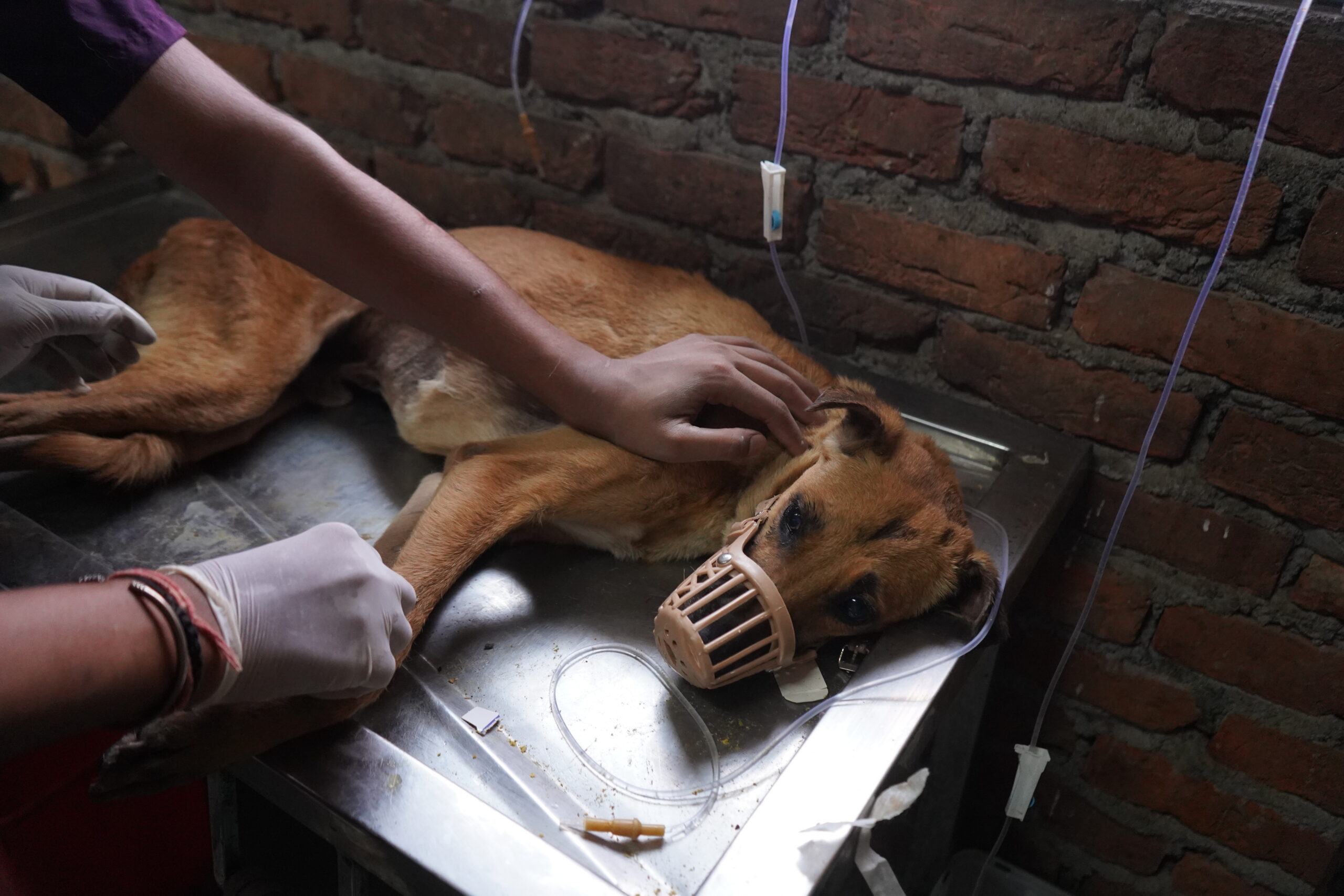
Earthlings Trust and partner organisations conduct regular ABC camps across Noida and Delhi NCR to advance dog sterilisation India efforts on the ground. A typical camp involves a mobile veterinary team, a temporary sterile operating setup, a dedicated recovery kennel area, and community volunteers who help identify and safely catch dogs in their own neighbourhood, because local feeders and residents know exactly where each dog sleeps, eats, and feels safe.
The cost of dog sterilisation India typically ranges from ₹800 to ₹2,500 per surgery, depending on the dog’s size, sex (female sterilisations are more surgically involved than male), and whether the procedure is performed by a government-empanelled NGO or a private clinic. Donor-funded ABC camps allow this cost to be fully covered for community dogs whose feeders cannot afford veterinary fees.
How You Can Support Dog Sterilisation India
- Sponsor a sterilisation surgery: a single donation of ₹1,000 to ₹1,500 can fund one dog’s complete sterilisation and vaccination
- Report unsterilised community dogs in your neighbourhood to Earthlings Trust so they can be included in the next ABC camp
- Volunteer during camps: help identify, feed, and calm dogs before and after their procedure
- Advocate with your RWA: many housing societies are unaware that sterilisation, not removal, is the only legal option under the ABC Rules, 2023
- Educate your community: myths about sterilisation persist largely due to lack of awareness, and sharing accurate information changes minds
FAQ: Dog Sterilisation India
Q: Is it mandatory for RWAs to allow ABC camps and sterilised dogs to stay in their premises?
A: Yes. Under the ABC Rules, 2023 and multiple court rulings, sterilised and vaccinated community dogs have a legal right to live in the area they were picked up from, and housing societies cannot forcibly remove or relocate them.
Q: How soon after sterilisation can a dog return to normal activity?
A: Most dogs recover within 7 to 10 days. During this period, minimal activity, a clean recovery space, and monitoring for infection at the incision site are essential, which is why supervised post-operative care matters as much as the surgery itself.
Q: Does sterilisation stop a dog from barking or guarding territory?
A: No, and it should not. Sterilisation reduces mating-driven roaming and aggression, but a dog’s natural alertness and protective instincts toward its territory remain intact.
Q: Can I get my own community dog sterilised for free?
A: In many areas, government-recognised ABC centres and NGOs like Earthlings Trust offer free or subsidised sterilisation for community dogs. Contact us at earthlingstrust@gmail.com to find the nearest camp in Noida or Delhi NCR.
Conclusion: One Surgery, A Lifetime of Impact
Every sterilised dog represents dozens of puppies who will never be born into a life of hunger, disease, and danger on Indian streets. Dog sterilisation India is the most cost-effective, humane, and legally sound intervention available, and it depends entirely on sustained public support.
Support Earthlings Trust’s ongoing sterilisation drives in Noida and Delhi NCR. Sponsor a surgery, report an unsterilised colony, or volunteer at our next ABC camp. Every dog sterilised today is one less litter suffering tomorrow.