
At Home Dog Grooming Guide India: Why Grooming Is a Health Task
Grooming is often treated as cosmetic. For dogs living with India’s heat, humidity and heavy monsoon rains, it does real work: it prevents skin infections, parasite infestations and daily discomfort. This at home dog grooming guide India’s pet parents can follow season by season works for both pedigree and indie dogs.
For basic technique, the American Kennel Club’s home grooming guide is a good reference. What follows adapts it to Indian conditions. For vet-reviewed guidance on skin and dental health, see the World Small Animal Veterinary Association (WSAVA).
Quick answer: how often to bathe a dog in India depends on the season. Most dogs need a bath every 2-4 weeks (more often in monsoon if the coat gets wet often, less in winter), brushing 2-3 times a week to manage shedding and humidity-related matting, weekly ear checks, and nail trims every 3-4 weeks. Indie dogs, with their short, low-maintenance coats, generally need less grooming than double-coated or long-haired pedigree breeds.
Table of Contents
Understanding Your Dog’s Specific Grooming Needs
The dog grooming tips India’s pet parents need depend mostly on coat type:
- Short-coated indie dogs (the most common coat type among India’s street and rescue dogs) require the least maintenance: occasional brushing, regular bathing, and basic hygiene checks
- Double-coated breeds (Huskies, German Shepherds, Golden Retrievers) require significantly more frequent brushing to manage shedding and prevent matting, particularly challenging in India’s humid climate
- Long-haired breeds are prone to matting, especially around the ears, tail, and legs, requiring more frequent, careful brushing
- Flat-faced (brachycephalic) breeds require specific attention to facial skin folds, which can trap moisture and bacteria in humid conditions
Bathing Frequency: How Often to Bathe a Dog in India
Over-bathing strips a dog’s coat of natural protective oils, while under-bathing in India’s dust, humidity, and pollution can lead to skin issues. Here is how the routine shifts by season:
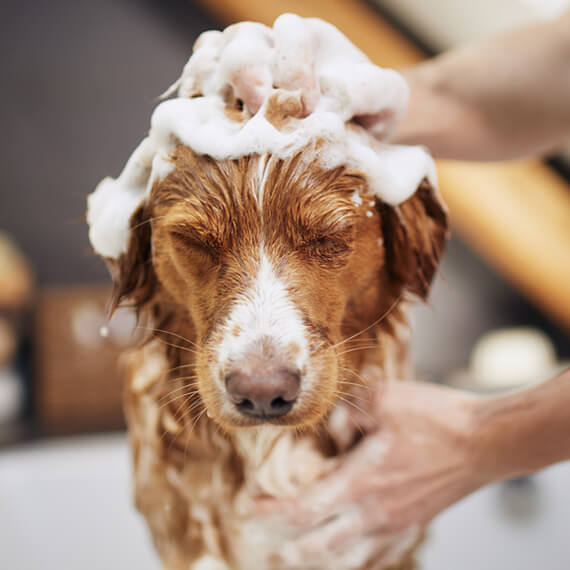
- Summer: Every 2-3 weeks, using this opportunity to also check for heat rash, dry skin, or paw pad damage
- Monsoon: Bathe as needed after your dog gets wet or muddy, but prioritise thorough drying over bath frequency itself. Damp fur left to air-dry slowly is the real driver of monsoon skin infections, not the bathing itself
- Winter: Slightly less frequent bathing (every 3-4 weeks) is often appropriate, using lukewarm (not hot) water, and ensuring your dog is fully dry before going outside in cooler temperatures
Always use a dog-specific shampoo. Human shampoo has a different pH balance that can irritate a dog’s skin and strip protective natural oils.
The Critical Monsoon Grooming Rule: Dry Thoroughly, Every Time
Of all monsoon dog grooming tips, this one matters most. After any exposure to rain or wet ground:
- Towel-dry your dog thoroughly, paying particular attention to the belly, legs, and paws
- Use a pet-safe hairdryer on a cool or low setting for double-coated or long-haired breeds, keeping a safe distance to avoid overheating sensitive skin
- Check and dry between the toes carefully, since this is the most common site for fungal infections during monsoon
- Check and gently dry inside the ears, since trapped moisture is a leading cause of monsoon-season ear infections
Far more monsoon-season skin problems in Indian dogs come from fur left damp for hours than from getting wet in the first place. Thorough drying is the actual protective grooming step, not avoiding rain altogether, which is rarely realistic.
Brushing: Managing Shedding and Humidity
Good dog coat care Indian summer heat demands starts with the brush. Regular brushing clears dead undercoat so air reaches the skin, and it stops damp fur from matting once the monsoon arrives.
- Short-coated dogs benefit from brushing 1-2 times weekly using a rubber curry brush or grooming mitt, which removes loose hair and stimulates healthy skin circulation
- Double-coated and long-haired dogs need brushing 3-4 times weekly, or daily during heavy seasonal shedding periods, to prevent matting, which becomes significantly more likely in humid conditions
- Focus particular attention on areas prone to matting: behind the ears, under the collar, the armpits, and around the tail base
Nail Care: Often Overlooked, Genuinely Important
Overgrown nails can cause pain, posture problems, and difficulty walking, particularly for senior dogs. Trim every 3-4 weeks, or more frequently for dogs who do not naturally wear down their nails through regular walking on hard surfaces.
- Trim only the tip of the nail, avoiding the “quick” (the pink, sensitive area visible in light-coloured nails, harder to see in dark nails, so trim conservatively in small increments if unsure)
- Keep styptic powder or cornstarch on hand in case of accidental bleeding from cutting too short
- If your dog is highly anxious about nail trims, consider a gradual desensitisation approach: handling paws calmly and rewarding tolerance over multiple short sessions, rather than one stressful attempt
Ear Care: A Weekly Check Prevents Bigger Problems
- Check ears weekly for redness, unusual odour, discharge, or excessive wax buildup, all signs warranting veterinary attention rather than home treatment
- Clean gently with a vet-approved ear cleaning solution and a soft cloth or cotton ball. Never insert cotton swabs deep into the ear canal
- Dogs with floppy ears (many indie dogs and several pedigree breeds) are at higher risk of ear infections due to reduced airflow, particularly during humid monsoon months
Paw Care: Protecting Against Extreme Surface Temperatures
- During peak summer, check pavement temperature with the back of your hand before a walk. If it is too hot for your hand for five seconds, it is too hot for your dog’s paws
- Walk during cooler parts of the day (early morning, evening) during summer heatwaves
- After monsoon walks, check paw pads and between toes for cuts, thorns, or early signs of fungal infection
- Consider a pet-safe paw balm during extreme heat or cold to protect against cracking
Dental Care as Part of Your Grooming Routine
- Brush your dog’s teeth 2-3 times weekly using a dog-specific toothbrush and toothpaste (never human toothpaste, which can be toxic to dogs)
- Offer dental chews or appropriate chew toys that support natural plaque removal between brushings
- Schedule an annual veterinary dental check, particularly important for senior dogs
Grooming as a Bonding and Health-Monitoring Opportunity
Beyond hygiene, regular grooming sessions are a valuable opportunity to notice early signs of health issues (new lumps, skin changes, parasites, or areas of tenderness) that might otherwise go unnoticed. For rescue dogs still building trust, gentle, positive grooming sessions can also become a meaningful part of the bonding process, provided the pace matches the dog’s comfort level.
FAQ: Dog Grooming for India’s Climate
Q: How often should I really bathe my indie dog in Indian summer?
A: Every 2-3 weeks is generally sufficient for short-coated indie dogs, even in hot weather. More frequent bathing can strip protective natural oils and paradoxically worsen skin dryness and irritation.
Q: Is it necessary to use a hairdryer on my dog, or is towel drying enough?
A: For short-coated dogs, thorough towel drying is usually sufficient. For double-coated or long-haired breeds, particularly during monsoon, a pet-safe hairdryer on a cool setting significantly reduces the risk of trapped moisture and resulting skin infections.
Q: My rescue dog panics during nail trims. What should I do?
A: Use a gradual desensitisation approach. Handle your dog’s paws and reward calm behaviour over several short sessions before attempting an actual trim, and consider a professional groomer or veterinarian for particularly anxious dogs rather than forcing a stressful home attempt.
Q: What are the most important monsoon dog grooming tips?
A: Dry your dog completely after every walk, check between the toes and inside the ears daily, and brush more often so damp fur does not mat. Most monsoon skin infections start where moisture stays trapped against the skin.
Q: Can I handle all grooming at home, or do I need a professional?
A: Most of the routine in this at home dog grooming guide India’s pet parents can manage themselves: bathing, brushing, ear checks, paw checks and teeth. See a groomer or vet for heavy matting, a dog that panics during nail trims, or any sign of infection such as redness, odour or discharge.
Q: Does Earthlings Trust offer grooming support for adopted or community dogs?
A: We provide basic grooming and hygiene care as part of our shelter operations and can offer guidance for adopters. Contact us at earthlingstrust@gmail.com for specific grooming questions about your dog.
Conclusion: Simple, Consistent Care Prevents Bigger Problems
Grooming adapted to India’s climate, with thorough drying during monsoon and heat protection during summer, is a simple, low-cost habit that prevents many of the most common skin and health issues seen in Indian dogs. None of these dog grooming tips India’s climate calls for need expensive equipment. They work because you do them consistently, and your dog stays comfortable and healthy through every season.
For more on seasonal care, read our guides on helping animals through the monsoon, common skin problems in dogs and preventing fleas and ticks, or contact Earthlings Trust directly.